e-flux Education // Fifteen years of SOMA
“In the history of education, there is a fundamental tension between liberation and discipline that crystallizes in times of crisis,” writes Noah Simblist in his introduction to Living to Learn: Art & Education for the Common Good, co-published by Inventory Press and Institute of Contemporary Art at Virginia Commonwealth University (ICA at VCU) this month. As the result of a multi-year international research project, Living to Learncompiles contributions from over seventy artists, curators, and scholars that study an international crop of art schools—both formal and informal—as well as museums, artistic practices, and biennials that have used education as methodology to respond to a range of socioeconomic and political challenges.
Focusing only on the past twenty-five years, Living to Learn portrays the “educational turn” of the new millennium as a reaction to the rise of knowledge and attention economies, as well as constraints on academia from government political agendas, the student debt crisis, and how land-grant universities are implicated in ongoing processes of colonialization and real-estate profiteering. The project's scope is ambitious and finds timely urgency as a body of work produced by an American public research university.
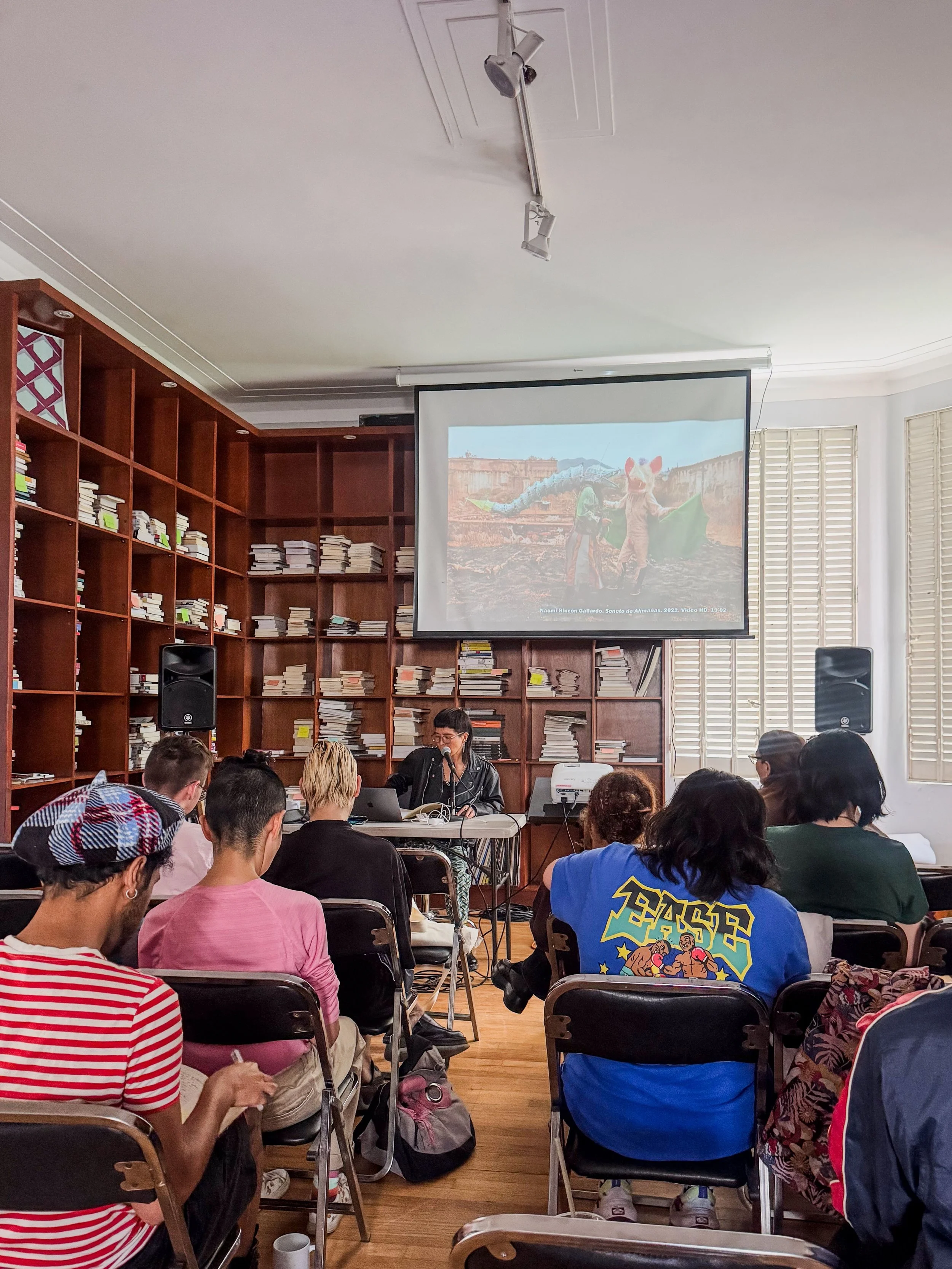
My essay, published in full below, focuses on SOMA, an artist-run alternative art school in Mexico City that has operated since 2009. I was a member of its MFA-like program’s second graduating class and its 2011 international summer program cohort. While writing about SOMA over a decade later, the question that emerged was: to what exactly is this school an alternative? To costly MFA programs in the United States? Or to the far narrower array of options in Latin America? To the need to rely on representation by a gallery to achieve financial stability as a professional artist? Is SOMA resisting the Mexican Secretary of Education’s requirement that all faculty must have MFAs and all students must have graduated from high school? Or is it disputing the role that cultural capital plays in Mexico’s soft-power transformation under President Sheinbaum’s pro-tourism “Plan México” policy, which has created a housing crisis and triggered anti-tourism protests?
The answer, to the degree that there is one, emerges in the form of an institutional paradox that arises from SOMA’s refusal to be pinned down. Throughout its sixteen years of existence, the school has shown a steadfast commitment to sustaining itself as an elastic platform, constantly shifting its facilities, programs, and faculty according to artists’ needs. But the rapidly changing socioeconomics of Mexico City and of the international art industry at large make SOMA’s formalization more pressing. Is this the inevitable tradeoff of growing up? Or does this imperative signal a more seismic shift under foot? As twentieth-century hegemonic structures break down, destabilizing the world in their wake, perhaps SOMA’s formalization points to how artists, such as Yoshua Okón and the Artist Council at SOMA, will have to construct frameworks of stability for themselves by building new arts institutions, while clearly defining who they will serve and how they will be funded.
In keeping with Living to Learn’s focus on education, the publication is being used as a tool to engage conversations at universities and in cities including VCUarts in Doha, Lugar a Dudas in Cali, Center for Art Research and Alliances (CARA) in New York and the Core Program at the Museum of Fine Arts Houston.